
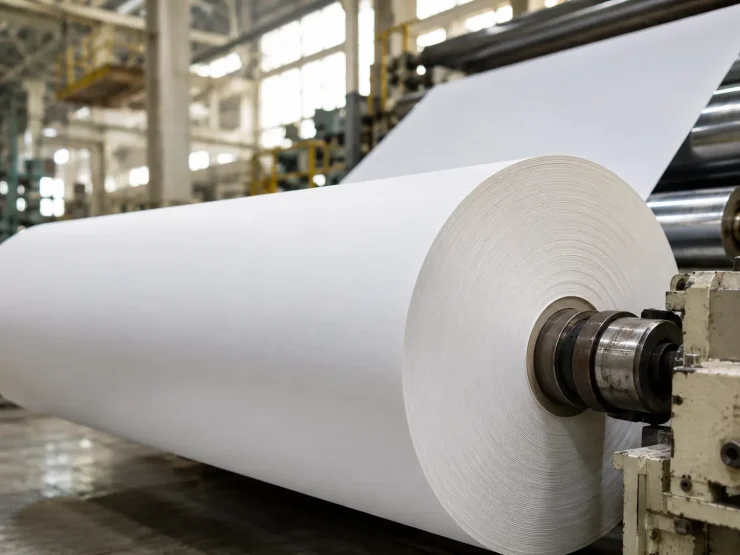
Paper Manufacturing Process in Nepal: A Complete Guide
Paper is something most of us use every single day without giving it a second thought. From school notebooks to packaging boxes, from office files to the simple receipt handed over at a local shop, paper touches almost every part of daily life in Nepal.
Yet very few people actually know what goes into making it. Behind every sheet of paper is a long, technical process that combines raw materials, machinery, water, chemicals, and a fair amount of skilled labour.
Nepal’s paper industry has grown steadily over the past few decades, and companies like Everest Paper Mills Pvt. Ltd., a sister concern under SB Group, have played a part in meeting the country’s growing demand for quality paper products.
As the construction, education, and packaging sectors expand, the need for locally manufactured paper has only increased.
The purpose of this article is to walk readers through the paper manufacturing process step by step, the raw materials involved, the types of paper produced in Nepal, and the challenges and opportunities the industry currently faces.
What is Paper Manufacturing?
Paper manufacturing is the process of converting raw fibrous materials, mainly wood pulp, waste paper, or agricultural residues, into thin sheets that can be used for writing, printing, packaging, and many other purposes.
The process has been refined over hundreds of years, but the basic idea remains the same: fibres are broken down, mixed with water to form a pulp, spread out into thin layers, and then dried to form sheets.
Modern paper mills use a combination of mechanical and chemical methods to make this process faster, cleaner, and more efficient than it used to be.
Raw Materials Used in Paper Manufacturing
The quality and type of paper produced depends largely on the raw material used. In Nepal, paper mills generally rely on a mix of the following:
- Wood Pulp: Sourced from softwood and hardwood trees, this is one of the most common raw materials for producing high quality paper.
- Waste Paper: Recycled paper is collected, cleaned, and reprocessed, which helps reduce both cost and environmental impact.
- Agricultural Residues: In some cases, materials like bagasse (sugarcane waste), wheat straw, and bamboo are used as alternative fibre sources.
- Chemicals: Various chemicals such as sodium hydroxide and bleaching agents are added during processing to break down fibres and whiten the pulp.
- Water: Large quantities of water are required throughout the process, from pulping to sheet formation.
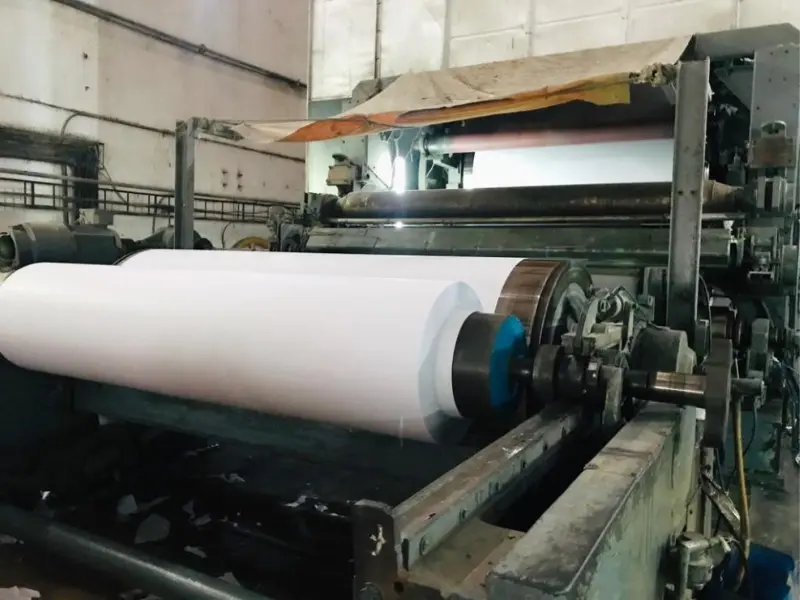
A Paper Manufacturing Machine
The Paper Manufacturing Process Step by Step
The actual process of turning raw material into finished paper involves several stages. Each stage plays an important role in determining the final quality, strength, and texture of the paper.
1. Raw Material Preparation
Before pulping can begin, the raw material has to be prepared. Logs are debarked and chipped into small pieces, while waste paper is sorted to remove staples, plastic, and other contaminants. This step ensures that only usable fibre moves forward into production.
2. Pulping
Pulping is the process of breaking down raw material into individual fibres. This can be done in two main ways:
- Mechanical Pulping: Wood chips are ground down using mechanical force. This method is cheaper but produces lower quality pulp.
- Chemical Pulping: Chemicals are used to dissolve the lignin that binds fibres together, producing stronger and cleaner pulp. This method is more common for producing higher-grade paper.
3. Bleaching
Once the pulp is formed, it often goes through a bleaching stage to remove any remaining colour and impurities. This step is what gives paper its bright white appearance, although unbleached pulp is also used for certain packaging products where colour is not a concern.
4. Refining and Stock Preparation
The bleached pulp is refined further to improve fibre bonding. At this stage, additives such as starch, fillers, and sizing agents may be mixed in depending on the type of paper being produced, whether it is meant for writing, printing, or packaging.
5. Sheet Formation
The prepared pulp, now mostly water, is fed onto a moving wire mesh known as the Fourdrinier machine. As water drains out, a thin mat of fibres begins to form. This is the stage where the actual “sheet” of paper starts taking shape.
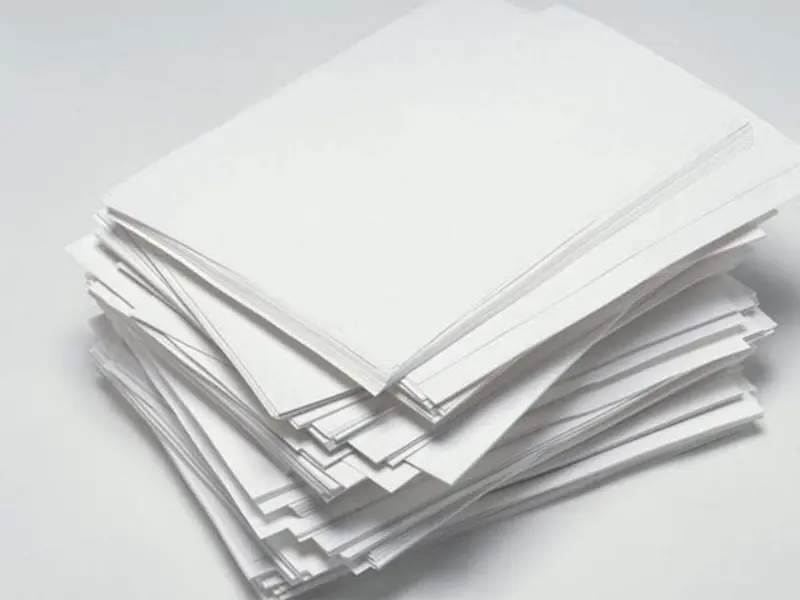
Paper Sheets
6. Pressing
The wet sheet then passes through a series of rollers that press out additional water and compact the fibres together, increasing the strength and density of the paper.
7. Drying
After pressing, the paper still contains a significant amount of moisture. It passes through heated drying cylinders that remove the remaining water, leaving behind a dry, continuous sheet of paper.
8. Calendering and Finishing
The dried paper is passed through calender rollers to smoothen its surface and achieve the desired thickness. Depending on the end use, the paper may also be coated to improve printability or surface finish.
9. Cutting and Packaging
Finally, the large rolls of finished paper are cut into smaller rolls or sheets according to customer requirements, then packaged and prepared for distribution.
Types of Paper Produced in Nepal
Nepal’s paper mills cater to a wide variety of needs across different industries. Some of the common types of paper produced locally include:
- Writing and Printing Paper: Used in notebooks, textbooks, and office printing.
- Kraft Paper: A strong, brown paper commonly used for packaging and industrial purposes.
- Newsprint: Lightweight paper used for printing newspapers.
- Tissue Paper: Soft paper used for hygiene products.
- Packaging Board: Thicker paper material used in boxes and cartons.
Quality Control in Paper Manufacturing
Quality control is an essential part of the paper manufacturing process, as even small inconsistencies in thickness, strength, or moisture content can affect the usability of the final product. Mills generally monitor the following factors closely:
- Moisture content
- Brightness and whiteness
- Tensile strength
- Smoothness of the surface
- Basis weight (grammage)
Regular testing at different stages of production helps ensure that the paper meets the standards required by customers, whether for printing, writing, or packaging purposes.
Environmental Considerations in Paper Manufacturing
Paper manufacturing, like most industrial processes, has an environmental footprint that mills today are increasingly required to manage responsibly. Some of the key environmental practices being adopted include:
- Water Treatment: Treating wastewater before it is released back into the environment.
- Use of Recycled Fibre: Reducing dependency on virgin wood pulp by incorporating recycled paper.
- Energy Efficiency: Using more efficient drying and processing technology to reduce energy consumption.
- Afforestation Programs: Some mills support tree plantation initiatives to offset the use of wood as raw material.
As awareness around sustainability grows, paper mills in Nepal are being pushed to adopt cleaner and more responsible production methods.

Industrial Paper Manufacturing Line
Challenges in Paper Manufacturing in Nepal
Despite steady growth, the paper manufacturing industry in Nepal faces several challenges:
- Raw Material Shortage: A large portion of pulp and raw material still needs to be imported, which increases production costs.
- High Energy Costs: Paper production is energy intensive, and inconsistent power supply or high tariffs can affect operations.
- Outdated Technology: Some mills continue to operate with older machinery, which can affect efficiency and product quality compared to international standards.
- Competition from Imports: Cheaper imported paper products, particularly from neighbouring countries, create pricing pressure on local manufacturers.
- Environmental Compliance: Meeting environmental regulations while keeping production costs manageable remains an ongoing balancing act.
Opportunities in the Paper Industry
Even with these challenges, there are clear opportunities for growth in Nepal’s paper manufacturing sector:
- Rising demand for packaging material driven by e-commerce and the food industry
- Growth in the education sector increasing demand for writing and printing paper
- Increasing awareness around eco-friendly and recycled paper products
- Government support for local manufacturing under “Make in Nepal” type initiatives
- Potential to explore export markets within the region
If managed well, these opportunities could help local manufacturers like Everest Paper Mills strengthen their position in both the domestic and regional markets.
Tips for Efficient Paper Manufacturing
Manufacturers looking to improve efficiency and product quality in paper production should focus on the following:
- Regular maintenance of machinery to avoid downtime
- Investment in modern pulping and drying technology
- Proper wastewater treatment systems
- Skilled workforce training on quality control
- Diversifying raw material sources to reduce dependency on a single supply chain
Conclusion
The paper manufacturing process is far more detailed and technical than most people realize. What starts as raw wood, waste paper, or agricultural residue eventually transforms, through pulping, bleaching, pressing, and drying, into the everyday sheets of paper that support education, business, and packaging across the country.
As demand for paper products continues to rise alongside Nepal’s growing economy, the role of local manufacturers becomes even more important. Companies operating in this space, including Everest Paper Mills Pvt. Ltd. under SB Group, contribute to reducing dependency on imports while supporting local employment and industrial growth.
With the right investment in technology, sustainability practices, and skilled manpower, Nepal’s paper manufacturing industry has the potential to grow into a stronger and more self-reliant sector in the years ahead.