

Broiler Chicken Feed Formulation in Nepal: A Guide to Balanced Nutrition for Profitable Poultry Production
From this perspective, it is worth noting that the poultry sector has emerged as one of the fastest-growing agricultural sectors in Nepal, providing a strong foundation for rural employment and food security, while also supporting the national economy.
Within this sector, broiler farming—that is, rearing chickens exclusively for meat production —has been spreading rapidly. Precisely, feed formulation is one of the most critical aspects of determining the success and profitability of broiler farming.
Feed alone accounts for approximately 70-80% of the total production cost in broiler farming. Efficient and balanced formulation of broiler chicken feed in Nepal thus forms an essential component of sustainability and profitability.
This article discusses the science, challenges, and best practices associated with feed formulation for broilers within the Nepalese context, with a focus on utilizing locally available ingredients, achieving nutritional balance, and leveraging the latest feed technology.
Understanding Broiler Nutrition
This efficient growth enables broiler chickens to reach market weight in 35 to 45 days. Such effective growth needs energy-rich feed supplemented with proteins, amino acids, vitamins, and minerals. The nutritional needs of broilers vary at each growth stage, including the starter, grower, and finisher stages.
A well-designed broiler feed formulation in Nepal ensures that birds receive the optimal intake of nutrients, leading to improved muscle growth, stronger bones, enhanced immune function, and increased feed efficiency. Major nutrients in broiler feed include:
- Energy: Supplied mainly by maize, wheat, or rice bran.
- Protein: Supplied through soybean meal, mustard cake, fish meal, or meat meal.
- Vitamins and minerals: Supplied through commercial premixes.
- Amino Acids: Lysine, methionine, and threonine are essential for the development of muscles.
- Fats and oils: are added to increase energy density and enhance the palatability of the product.
Also Read: Feed Management for Sustainable Poultry Farming in Nepal
Stages of Broiler Feed Formulation
A proper feed formulation will include the growth stage of the bird, and usually, broiler feed is subdivided into three main phases:
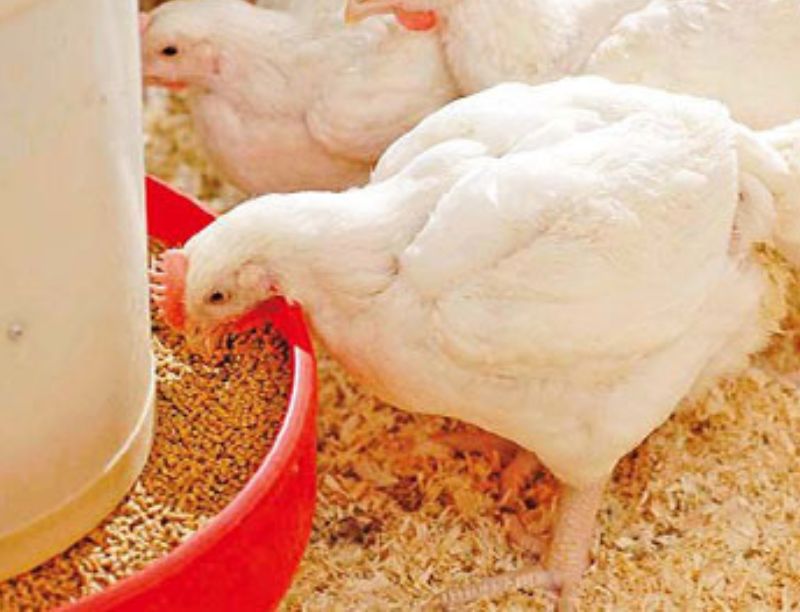
Broiler Feeds(Source: bestpelletplant)
Starter Feed (0–14 days)
Highly digestible and protein-rich feed is crucial for promoting rapid tissue growth and robust immunity during the first two weeks.
Typical Composition:
- Crude Protein (CP): 22–24%
- Metabolizable Energy (ME): 2900-3000 kcal/kg
Common Ingredients:
- Maize or corn: 55–60%
- Soybean meal: 25-30%
- Fish meal: 4–5%
- Rice bran or wheat bran: 4–5%
- Mineral-vitamin premix: 1%
Grower Feed (15–28 days)
It is characterized by growth in muscles and the skeleton. Energy is slightly increased while the protein is moderately reduced.
Typical Composition:
- Crude Protein: 20–21%
- Metabolizable Energy: 3000–3100 kcal/kg
Common Ingredients:
- Maize: 60–65%
- Soybean meal: 20–25%
- Mustard cake: 3–4%
- Fish meal: 2–3%
- Vegetable or animal oil: 1–2%
- Vitamin-mineral premix: 1%
Finisher Feed (29–45 days)
This phase is intended to reach the desired market weight with maximum feed efficiency.
Typical Composition:
- Crude Protein: 18–19%
- Metabolizable Energy: 3100-3200 kcal/kg
Common Ingredients:
- Maize: 65–70%
- Soybean meal: 15–20%
- Rice bran: 5–6%
- Oil: 2–3%
- Mineral-vitamin premix: 1%
Modern Feed Formulation Techniques
Large-scale poultry feed mills in Nepal are adopting advanced feed formulation tools. State-of-the-art techniques ensure precision nutrient balancing, ingredient optimization, and cost efficiency.
- Computer-Aided Formulation Software: Linear programming is utilized in programs such as WinFeed, Brill, or Feedsoft to calculate the least-cost mix based on the nutrient profiles provided by nutritionists.
- Feed Testing and Laboratory Analysis: It performs proximate analysis for levels such as protein, fat, fiber, and moisture, among others, to ensure consistency in feed quality for each raw material sample sent to the laboratory by modern feed mills.
- Pelletization Technology: Due to reduced feed wastage, improved digestibility, and higher growth rates compared to mash feed, pellet feeds are gaining popularity in Nepal.
Challenges in Broiler Feed Formulation in Nepal
Despite various improvements in feed manufacturing, the following challenges are still evident in the Nepalese poultry sector:
- High costs of raw materials: Most of the raw materials involved are rich in protein sourced from India or overseas, including soybean meal and premixes. Those are more expensive, and the price may fluctuate at any time.
- Nutritional Knowledge Gap: Most smallholder farmers lack the technical knowledge to formulate a balanced feed, resulting in either undernourished or overfed broilers.
- Feed adulteration: It is evident that unregulated feed producers often add low-quality ingredients or fillers to the feed, thereby compromising the health and performance of animals.
- Transportation and Storage Issues: Feed ingredients should be stored in a dry and insect-free environment. High humidity in Nepal, combined with inadequate storage facilities, can sometimes lead to spoilage or contamination of food products.
- Inconsistent Supply Chain: This consistent production is due to the seasonal availability of maize and soybeans. Feed mills generally face a shortage during the monsoon and winter periods.
Improving Broiler Feed Formulation in Nepal
These difficulties can be resolved by implementing the following strategies at the farm and national levels :
- Promotion of Local Feed Production: This would promote the local cultivation of soybeans, maize, and oilseeds, thereby reducing reliance on imports and stabilizing feed costs.
- Farmer Training Programs: The government and poultry associations often recommend regular workshops and training on broiler nutrition and feed formulation.
- Establishment of Feed Testing Laboratories: A regional feed quality control center can ensure standardization and protect farmers from adulterated products.
- Using Alternative Protein Sources: Identified non-traditional ingredients with potential as cost-effective protein sources include black soldier fly larvae, azolla, duckweed, and by-products of legumes.
- Integration of Modern Feed Technology: Further improvements can be achieved by adopting automated mixing systems, quality control tools, and data-driven formulation software at feed mills.
Economic Importance of Proper Feed Formulation
Effective broiler chicken feed formulation in Nepal nourishes the following:
- Improved feed conversion ratio, hence reducing the feed cost per kilogram of meat.
- Increased growth rate and carcass quality translate into increased profits.
- Better disease resistance, thus reducing losses through mortality.
- Sustainability, Better feed efficiency means reduced resource use and, therefore, a smaller environmental footprint.
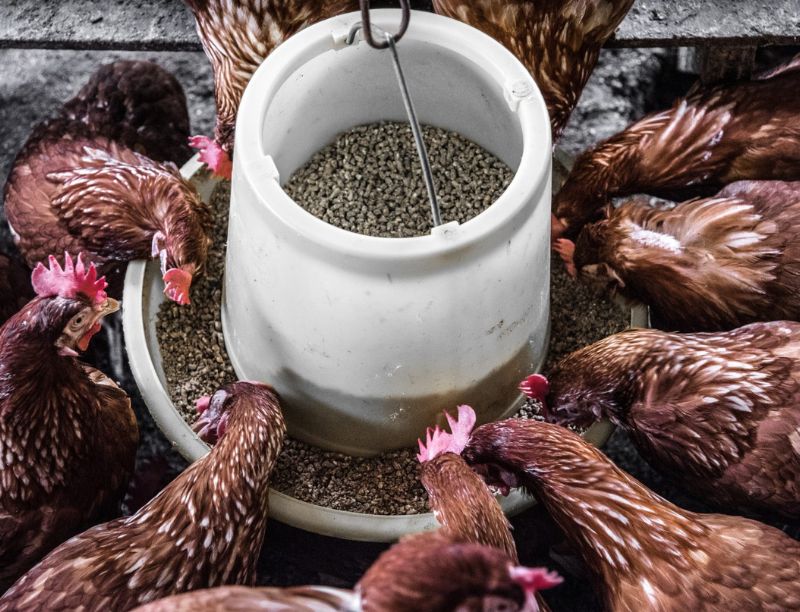
Importance of Broiler Chicken Feed(Source: feedsafenz)
A 5% improvement in feed conversion goes a long way toward expanding profit margins for any farm. Consequently, feed formulation is a key factor in profitable broiler farming.
Sustainable Feed Formulation Practices
The key in today’s poultry production is sustainability. In Nepal, sustainable feeding can be practiced by:
- Utilization of agro-industrial by-products: rice bran, mustard cake, and wheat bran.
- Recycling waste from local food industries into circular feeding systems.
- Organic and herbal feed additives include ingredients such as turmeric, garlic, and neem, which help reduce the need for antibiotics.
- Precision feeding automatically adjusts levels of nutrients needed according to growth data.
Conclusion
The result is that broiler chicken feed formulation forms the backbone of any successful poultry production in Nepal, since it covers the health of birds, growth rate, and profitability at the farm level. The key lies in designing a balanced feed using locally available ingredients, guided by nutritional science, and supported by modern technologies.
The proper formulation of feeds will help Nepal not only reduce its dependency on imports but also enhance the quality and competitiveness of its poultry industry. As awareness, research, and technology continue to grow, broiler farming in Nepal is poised for a bright future, driven by innovation, sustainability, and nutritional excellence.
Read More: HIGH PROTEIN FEEDS FOR CHICKEN