
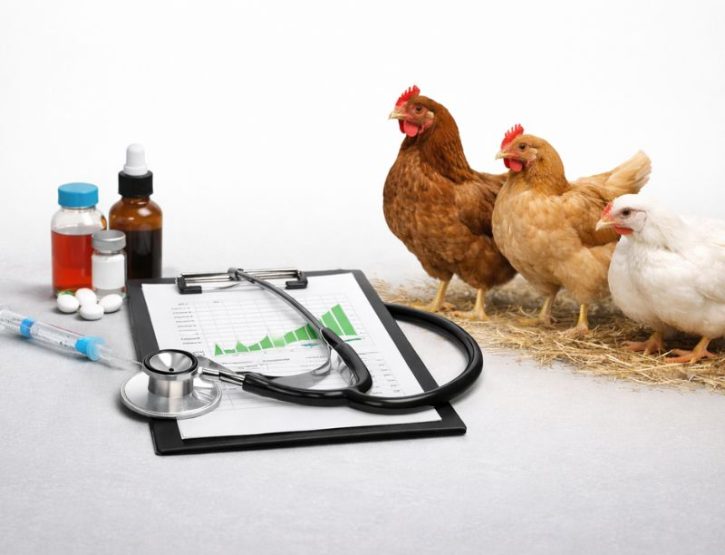
Poultry Health Monitoring: Laying the Building Blocks for Sustainable Poultry Farming
Among the fastest-growing agricultural industries, the poultry sector has emerged in Nepal. In the last couple of decades, the modality of poultry farming has gradually transformed from small backyard-based to commercial-scale enterprises that supply meat and eggs across the nation. This is a transformation that is still ongoing. Poultry health monitoring in Nepal has thus become critical to ensure productivity, food safety, and long-term sustainability.
With increasing demand, rising disease risks, and growing awareness among farmers, health monitoring is no longer a choice; it is becoming imperative. The paper looks at the current situation of poultry health monitoring in Nepal, its importance, existing challenges, modern technologies, and the future course that the sector would take.
The term poultry health monitoring means the regular observation and rating of bird health throughout their lifecycle. It includes disease prevention, early detection, vaccination, biosecurity practices, nutrition management, and record keeping. In Nepal, where climatic conditions vary widely—from hot Terai plains to cold Himalayan regions—health monitoring must be tailored to local environments. Inadequate monitoring and control measures result in the outbreak of diseases, high mortality, losses, and health challenges.
Role of Poultry Health Monitoring
Here are some Roles:
Disease Prevention & Early Detection
The poultry sectors in Nepal face risks from various contagious diseases, such as:
- Newcastle Disease (Ranikhet)
- Avian Influenza (Bird Flu)
- Infectious Bursal Disease (Gumboro)
- Fowl Pox
- Salmonellosis
Effective poultry health surveillance in Nepal would enable poultry farmers to capture early signs of disease and act promptly before the disease spirals out of control.
Increasing Productivity & Profitability
Well-nourished birds grow faster, have good feed efficiency, and provide high-quality eggs and meat. Maintenance monitoring results in lower mortality rates and improved feed conversion ratios (FCR), thereby affecting profitability.
Given the nature of a country like Nepal, whose main source of income for its farmers could be through poultry, health monitoring acts as an economic stabilizer.
Food Safety and Public Health
Bird diseases can be transferred to humans through meat and egg contamination. Good health surveillance ensures that zoonotic diseases are avoided and that the consumer can trust the chicken produced in Nepal.
Current Status of Poultry Health Monitoring

A Modern Poultry House(Source: extension.psu.edu)
Personal Practices
In Nepal, small and medium-scale poultry farmers continue practicing poultry disease diagnosis through observation and traditional knowledge. Farmers recognize poultry disease in their poultry when their poultry exhibit severe clinical signs like lethargy, loss of appetite, and death.
Even though there is some element of experience here, the reactive nature of this approach tends to cause interventions that occur late.
Agricultural & Livestock Production
Large-scale poultry farms have taken up improved monitoring systems, which include:
- Scheduled vaccination programs
- Regular visits to the vet
- Recording of mortality and feed consumption
- Controlled Housing and Biosecurity Procedures
Nevertheless, there is still some variability in the quality of health data collection in commercial farms.
Role of Veterinarians and Extension Services
Veterinarians are major contributors to monitoring poultry health in Nepal. Their functions involve:
- Diagnosing poultry diseases
- Development of vaccination schedules
- Biosecurity and nutritional counseling
- Conducting post-mortem exams
- Training farmers on disease prevention
Veterinary services from the government and the agricultural extension services have been of great assistance, especially in the rural areas. Resources and staff are, however, limited.
Common Poultry Health Challenges
The following are the challenges:
Lack of Awareness and Training
Many poultry farmers, particularly first-time and rural farmers, lack formal training in poultry health management. Misuse of antibiotics and delayed treatment are common issues.
Limited Access to Diagnostic Facilities
Advanced diagnostic laboratories are concentrated in urban areas like Kathmandu, Chitwan, and Pokhara. Farmers in remote regions struggle to access timely disease diagnosis, delaying effective treatment.
Biosecurity Gaps
Weak biosecurity remains a major concern. Common problems include:
- Poor farm sanitation
- Lack of footbaths and protective clothing
- Unrestricted farm access
- Mixing birds of different ages
These gaps significantly increase disease risks.
Climate and Environmental Stress
Nepal’s diverse climate exposes poultry to heat stress, cold stress, and seasonal disease outbreaks. Without proper monitoring, environmental stress weakens bird immunity.
Role of Technology in Poultry Health Monitoring
Modern technology is gradually transforming poultry farming in Nepal.
Digital Record Keeping
Farmers are increasingly using mobile apps and software to track:
- Mortality rates
- Feed consumption
- Vaccination schedules
- Growth performance
Digital records improve decision-making and early problem detection.
Sensors and Automated Systems
In advanced farms, automated systems monitor:
- Temperature and humidity
- Water and feed intake
- Bird movement and behavior
Any abnormal change alerts farmers to potential health issues.
Tele-veterinary Services
Online consultations and mobile-based veterinary support are emerging, especially beneficial for farmers in remote areas with limited access to professionals.
Vaccination and Preventive Health Programs
Vaccination is the backbone of poultry health monitoring in Nepal. A proper vaccination schedule protects birds from common diseases and reduces dependence on antibiotics.
Key preventive measures include:
- Timely vaccination
- Regular deworming
- Clean water supply
- Balanced nutrition
- Stress management
Preventive healthcare is more cost-effective than treating diseases after outbreaks.
Antibiotic Use and Resistance Issues
Overuse and misuse of antibiotics are a growing concern in Nepal’s poultry sector. Many farmers administer antibiotics without veterinary guidance, leading to:
- Antibiotic resistance
- Residues in meat and eggs
- Public health risks

Antibiotic Use and Resistance Issues(Source: nytimes)
Responsible poultry health monitoring emphasizes judicious antibiotic use, alternative disease prevention methods, and strict withdrawal periods.
Poultry Health Monitoring and Smallholder Farmers
Smallholder farmers form the backbone of Nepal’s poultry industry. Improving health monitoring among these farmers requires:
- Affordable veterinary services
- Practical training programs
- Community-based monitoring systems
- Cooperative models for shared resources
Empowering small farmers improves overall industry resilience.
Future of Poultry Health Monitoring
The future of poultry farming in Nepal depends heavily on health management advancements. Key trends include:
- Expansion of diagnostic labs
- Increased use of data-driven farming
- Stronger public-private partnerships
- Greater emphasis on biosecurity
- Farmer education and certification programs
If proper investment is made, Nepal is capable of developing a strong poultry health monitoring system on an international level.
Conclusion
There is huge potential for poultry rearing in helping with food security, providing jobs, and assisting with economic development in Nepal. However, this huge potential for poultry rearing can be actualized with proper health monitoring in the poultry sector in Nepal. Right from disease control and productivity enhancement to food protection and public health protection, health monitoring is pivotal.
By integrating indigenous knowledge with technology, improving veterinary services, and enabling farmers, Nepal can create a resilient poultry sector that can look ahead to the future with strength. Investing in better health in the poultry sector today will bring a healthier, more profitable, and sustainable tomorrow to a healthier Nepal agricultural sector.
Read More: Homemade Poultry Feed Recipe