
Homemade Poultry Feed Recipe: A Complete Guide for Farmers
The search for an affordable, nutritious, and easily accessible poultry feed has become a top priority for farmers across the country. With rising commercial feed prices and increased competition in the poultry industry, many farmers are now looking for cost-effective alternatives. One of the most practical solutions is preparing homemade poultry feed using local ingredients. This article provides a detailed, step-by-step explanation of a Homemade poultry feed recipe in Nepal, including ingredient selection, nutritional requirements, cost benefits, and tips to ensure high-quality feed for your flock.
Poultry farming in Nepal is growing rapidly, and so is the demand for high-quality feed. However, challenges such as fluctuating market prices, inconsistent feed quality, and supply shortages have encouraged farmers to prepare feed on their own.
Creating a homemade poultry feed recipe in Nepal offers several benefits:
- Reduced feed cost
- Better control over nutrition
- Use of locally available ingredients
- Enhanced flock health and productivity
- Independence from commercial feed mills
Whether you rear broilers, layers, or local breeds like Kukhura or Pakhribas, homemade feed can significantly improve your farm’s profitability.
Understanding Nutritional Requirements
To formulate the best homemade poultry feed recipe in Nepal, you must understand what nutrients chickens need at different stages.
- Protein: Supports growth, muscle development, and egg production. Sources: soybean meal, fish meal, mustard cake, bone meal.
- Carbohydrates: Provide energy for daily activity. Sources: maize, wheat, rice bran, barley.
- Fat: Improves energy density and supports absorption of fat-soluble vitamins. Sources: vegetable oil, sunflower oil, animal fat.
- Minerals: Strengthen bones and boost eggshell quality. Sources: limestone, dicalcium phosphate (DCP), oyster shell.
- Vitamins: Boost immunity, fertility, digestion, and overall health. Sources: vitamin premix, green vegetables, sprouted grains.
- Fiber: Supports digestion and gut health. Sources: rice bran, wheat bran, grasses.

Nutrient Requirements of Poultry(Source: biggbunnygh)
Understanding these nutrient categories is crucial before developing a homemade poultry feed recipe in Nepal.
Locally Available Ingredients in Nepal
Nepal’s geography and agriculture provide many natural ingredients that allow farmers to create affordable, nutrient-rich feed.
Commonly Used Ingredients
- Maize (Makai) – Main energy source
- Soybean meal (Bhatmas Khal) – Excellent protein source
- Mustard cake (Saris ko Khal) – Readily available protein
- Rice bran (Bhuja) – Fiber and energy
- Wheat bran (Phus) – Fiber and nutrient support
- Broken rice (Furse Chamal) – Energy-rich
- Fish meal (Macha ko Khal) – High-quality protein
- Limestone (Chuna) – Calcium for eggshells
- Salt (NaCl) – Mineral balance
- Vitamin premix – Essential for immunity
- Vegetable scraps/greens – Boost vitamins naturally
These ingredients are commonly found in Nepali markets, agrovets, and local farms, making them perfect for a homemade poultry feed recipe in Nepal.
Homemade Feed Recipe for Broilers
Broilers grow quickly, so they require high protein and energy.
Broiler Starter Feed (0–21 Days)
Goal: Fast growth and strong bone development.
Ingredients & Proportion
- Maize: 52%
- Soybean meal: 28%
- Mustard cake: 6%
- Rice bran: 5%
- Fish meal: 4%
- Limestone: 1%
- Salt: 0.5%
- Vitamin premix: 1.5%
How to Prepare
- Grind maize to a medium texture
- Mix soybean meal and mustard cake
- Add fish meal and bran
- Mix minerals and vitamins
- Blend thoroughly for uniformity
This recipe results in a protein level of around 21–23%, suitable for rapid growth.
Also Read: Poultry Mortality Control
Broiler Grower Feed (22–35 Days)
Goal: Steady muscle gain and weight improvement.
Ingredients & Proportion
- Maize: 55%
- Soybean meal: 22%
- Mustard cake: 7%
- Rice bran: 7%
- Fish meal: 3%
- Limestone: 1%
- Salt: 0.5%
- Vitamin premix: 1.5%
The protein level falls to 19–20%, ideal for the grower phase.
Broiler Finisher Feed (36 Days to Market)
Goal: Reduce cost and maintain balanced energy.
Ingredients & Proportion
- Maize: 60%
- Soybean meal: 18%
- Mustard cake: 6%
- Rice bran: 8%
- Fish meal: 2%
- Limestone: 1%
- Salt: 0.5%
- Vitamin premix: 1.5%
Protein level is 17–18%, ideal for final finishing.
Homemade Feed Recipe for Layers
Layers require sufficient calcium and protein for quality egg production.
Layer Starter Feed (0–6 Weeks)
Ingredients & Proportion
- Maize: 50%
- Soybean meal: 28%
- Wheat bran: 8%
- Fish meal: 4%
- Mustard cake: 5%
- Limestone: 2%
- Salt: 0.5%
- Vitamin premix: 1.5%
- Protein level: 20–21%
Layer Grower Feed (7–18 Weeks)
Ingredients & Proportion
- Maize: 55%
- Soybean meal: 18%
- Wheat bran: 10%
- Rice bran: 5%
- Mustard cake: 5%
- Fish meal: 3%
- Limestone: 2%
- Salt: 0.5%
- Vitamin premix: 1.5%
- Protein level: 16–17%
Layer Layer Feed (19 Weeks Onward)
Ingredients & Proportion
- Maize: 50%
- Soybean meal: 15%
- Rice bran: 10%
- Wheat bran: 10%
- Mustard cake: 5%
- Fish meal: 4%
- Limestone: 4%
- Salt: 0.5%
- Vitamin premix: 0.5%
High calcium content (4–5%) improves eggshell strength.
Cost Benefits of Homemade Feed
The rising cost of commercial feed—often between NPR 65–80 per kg—places financial pressure on farmers. Preparing a homemade poultry feed recipe in Nepal can reduce costs by 20–40% depending on ingredient availability.

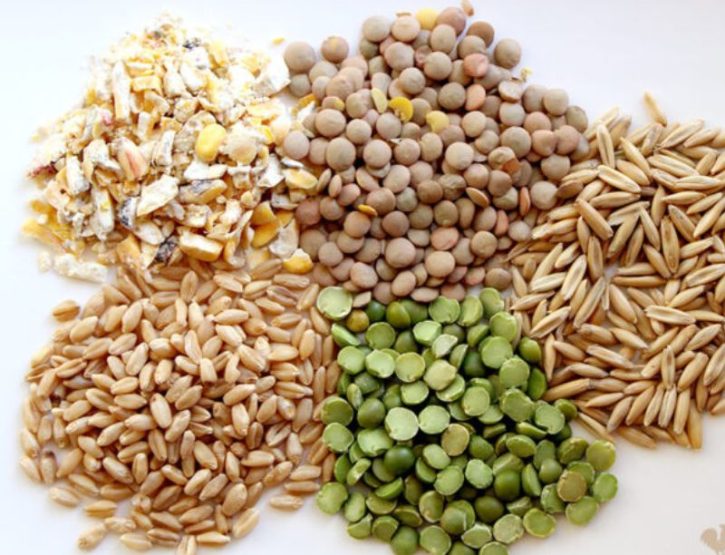
Poultry Feed(Source: gardenbetty)
Cost-Saving Advantages
- Bulk buying ingredients
- Using homegrown crops
- No factory processing charges
- No transportation markup
Farmers with their own maize fields or access to by-products can cut feed expenses dramatically.
Tips to Improve Feed Quality
Here are the following tips:
- Ensure Clean Grinding: Dirty grinders’ contamination can spread diseases.
- Maintain Proper Proportions: Never reduce protein too much—chickens will grow slowly or lay fewer eggs.
- Store Feed Properly: Moisture spoils nutrients and causes fungal growth.
- Add Probiotics or Fermented Feed: These improve gut health and feed absorption.
- Avoid Moldy Ingredients: Aflatoxins are deadly for poultry.
- Mix Thoroughly: Uneven mixing leads to malnutrition.
Common Mistakes Farmers Should Avoid
Making homemade feed is great, but mistakes can reduce production.
- Mistake 1: Too Much Bran: Bran reduces nutrient density and slows growth.
- Mistake 2: Using Unbalanced Protein Sources: Mustard cake must be balanced with soybean meal or other protein.
- Mistake 3: No Vitamin Supplement: Vitamin premixes are necessary even in homemade feed.
- Mistake 4: Excess Salt: Too much salt causes dehydration and kidney issues.
- Mistake 5: Feeding Raw Soybean: Raw soybeans contain anti-nutritional factors—always use processed soybean meal.
Simple Homemade Mash Feed for Local Chickens
Many rural Nepalese farmers raise local breeds (Desi Kukhura). Here’s a simple recipe:
Ingredients & Ratio
- Maize – 50%
- Rice bran – 20%
- Wheat bran – 15%
- Mustard cake – 10%
- Crushed eggshell – 3%
- Salt – 0.5%
- Greens/vegetable scraps – 1.5%
This feed is affordable yet nutritious for backyard chickens.
Benefits of Homemade Poultry Feed in Nepal
- Saves Money: Feed accounts for 60–70% of total poultry cost.
- Improves Egg Quality: Fresh, nutrient-balanced feed increases yolk color and shell strength.
- Reduces Dependency on Market: Farmers stay safe from price fluctuations.
- Customizable: Recipes can be adjusted for climate, breed, and age.
- Encourages Use of Local Resources: Supports sustainable farming.
Conclusion
Creating a homemade poultry feed recipe in Nepal is not only cost-effective but also empowering for farmers who want full control over poultry nutrition. With proper knowledge of ingredients, nutrition requirements, and mixing techniques, anyone—from small backyard farmers to commercial growers—can prepare high-quality feed tailored to their flock’s needs.
The key to success lies in using the right proportions, maintaining hygiene, and ensuring balanced nutrition. Homemade feed can boost growth, egg production, and overall poultry health while saving on high costs over time.
Read More: Best Poultry Feed Brands in Nepal