
Poultry Industry in Nepal: Economic Importance and Sustainable Growth
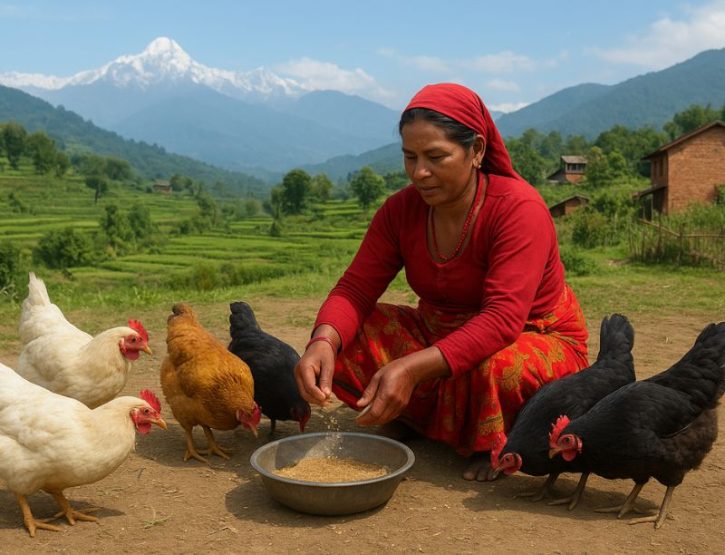
The poultry industry has become one of the most dynamic and fastest-growing sectors in Nepal’s agricultural economy. From a small-scale backyard enterprise, it has evolved into a modern and commercial industry over the last few decades. Today, poultry farming has become a significant contributor to food security, providing employment opportunities.
Not only does it ensure a continuous supply of meat and eggs, but it also generates industries that supply vital feed ingredients, vaccines, equipment, and transport services for this sector.
The paper provides a comprehensive overview of the background, economic significance, challenges, and prospects of the poultry industry in Nepal.
The introduction of modern breeds such as broilers and layers marked a turning point in the poultry sector. The improvement of technologies in housing, feeding, and disease management began to be adopted by farmers.
Current Status of the Poultry Industry in Nepal
Here are some statuses:
Geographic Distribution
Most of these commercial poultry farms are located in the Terai and mid-hill areas, more precisely in the districts of Chitwan, Nawalparasi, Kavre, Dhading, Rupandehi, and Morang. The Chitwan district is even referred to as the “Poultry Capital of Nepal” because numerous hatcheries, feed industries, and veterinary suppliers are located in the region.
Poultry Population
Various estimates put the number of birds in Nepal at over 75 million, comprising broilers, layers, and backyard chickens. The broiler sector dominates the market, with an over 70 percent share in total production, while layers contribute approximately 25 percent, laying millions of eggs every year.
Economic Importance of the Poultry Industry in Nepal
Poultry in Nepal is not only about nutrition; it is also an economic driver. It provides direct and indirect employment to hundreds of thousands of people, right from farmers to veterinarians, feed mills, and transporters.
Availability of cheap protein
Compared to other sources of protein, poultry meat and eggs are relatively cheaper and more available to the Nepalese people. Increased demand thus reflects the change in food habits and growing awareness regarding proper nutrition.
Allied Industries Promotion
The rapid growth in the Nepalese poultry industry has facilitated the emergence of other related sectors, such as:
- Poultry feed manufacturing
- Hatchery and breeding farms
- Veterinary medicine and vaccine production
- Manufacturing and transportation of equipment.
It contributes to the broader ecosystem of rural development by reducing reliance on imported foodstuffs.
Major Components of the Poultry Industry
The small-scale but booming poultry industry in Nepal has many interrelated elements; these need to work in harmony for the sector to function effectively.
Hatcheries
Such hatcheries can produce high-quality chicks, suitable for both broiler and layer farms. Additionally, they utilize both imported and local parent stocks to maintain high productivity rates. Modern hatcheries in Nepal utilize automated incubators and strict quality control methods to guarantee the production of healthy chicks.
Feed Mills
The quality of feed directly relates to the performance of poultry. In the country, various feed mills produce a balanced diet using maize, soybean meal, rice bran, and other primary ingredients. The major hubs of feed production are Chitwan, Nawalpur, and Rupandehi.
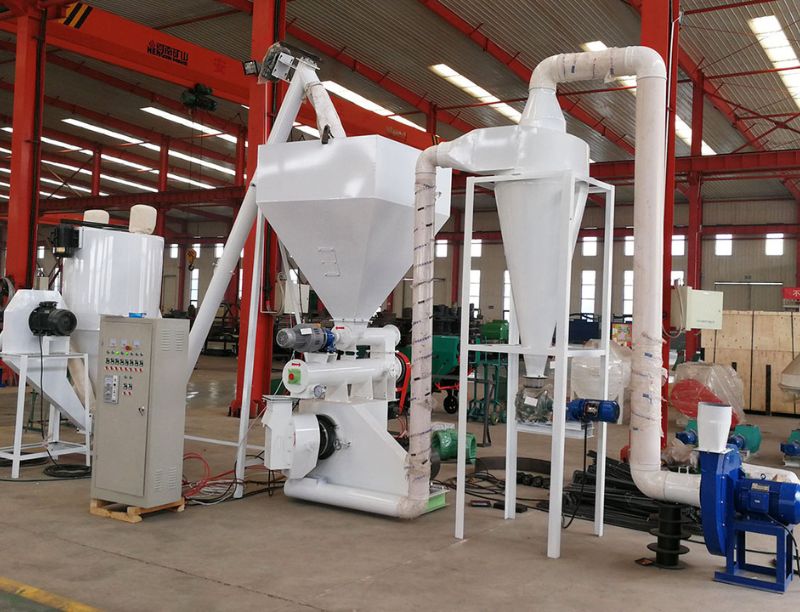
Poultry Feed Mills (Source: hightoppoultry)
Breeding and Production Farms
Commercial poultry farms can vary in size from a small, family-owned operation to large industrial complexes that house tens of thousands of birds. Birds on broiler farms are usually raised for efficient meat production, whereas birds on layer farms are commonly raised for continuous egg production.
Veterinary Services and Biosecurity
Veterinary support to prevent disease and optimize productivity is crucial. Vaccination, disease diagnosis, and enforcement of biosecurity measures are standard practices on commercial farms. Small-scale farmers often lack timely access to veterinary support.
Marketing and Distribution
In Nepal, the marketing network for poultry products has been developing considerably. Every day, wholesalers and retailers in the country sell fresh poultry meat and eggs through cold chain systems to urban and semi-urban markets.
Challenges Facing the Poultry Industry in Nepal
Although unprecedented achievements have occurred in recent years within the Nepalese poultry industry, several critical issues have emerged that raise doubts about its stability and future growth. Such problems need to be addressed for the industry’s continued success in the future.
Disease outbreaks
Newcastle disease, Avian Influenza, and IBD are the major avian diseases. The outbreak of these diseases causes an immense loss and thus disrupts production and market supply.
Feed Ingredient Shortages
Poultry relies heavily on imported feed ingredients, including soybean meal and corn (maize). Due to the high price and heavy reliance on these imports, the cost of production increases, which in turn affects the profitability of farmers.
Lack of cold-chain infrastructure
The system of cold storage and transportation, particularly in rural areas, is often inefficient, leading to spoilage or wastage during the distribution of poultry products.
Limited access to finance
Most small and medium-scale poultry farmers face significant challenges in accessing affordable credit and insurance facilities. High interest rates, combined with fewer loan programs, make business expansion or modernization difficult.
Market Fluctuations
The Nepalese poultry market is highly volatile, resulting in seasonal demand fluctuations and price manipulation, which can lead to inadequate market regulation and financial instability for producers.
Policy and Regulatory Gaps
Although the government has identified poultry as one of the priority sectors, its inconsistent policy and weak enforcement of standards prevent growth in this sector. More appropriate regulation and support systems would be required to give it sustainability.
Technical Developments in the Poultry Industry
Advanced technologies have entirely revolutionized the Nepalese poultry sector, making the industry more productive, efficient, and profitable. Nowadays, even automated systems for feeding, watering, and temperature control of birds are being adopted by farmers.
Smart Poultry House
Most poultry houses today depend on a climate-controlled environment that creates maximum comfort for the birds, hence reducing mortality rates to a minimum. Large farms typically utilize automated systems for ventilation, cooling, and heating.
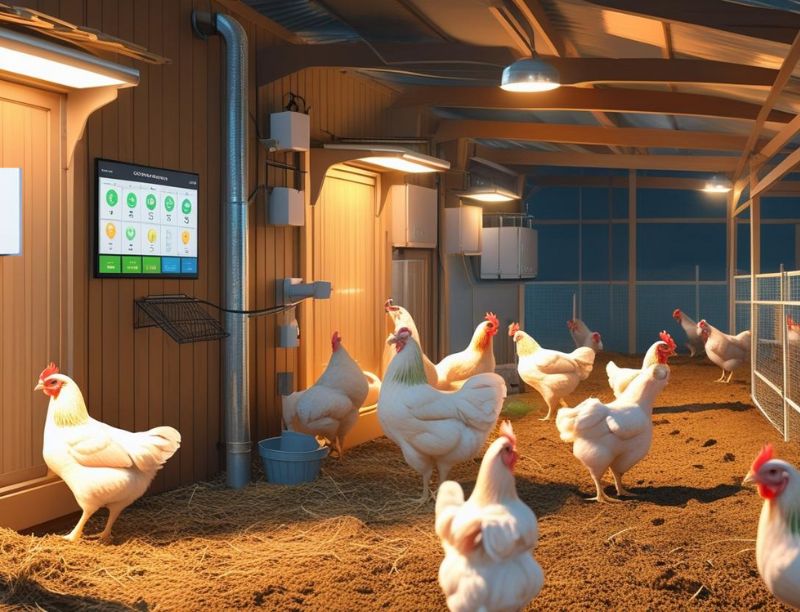
Smart Poultry House(Source: sonoff)
Digital Record Keeping
Nowadays, through mobile applications, farmers can monitor their flock’s performance, track the feed conversion ratio, and maintain health records. It brings better decision-making and is transparent.
Better Genetics
The use of high-yielding broiler and layer breeds has partly facilitated productivity gains. Genetic improvement most certainly ensures faster growth rates, improved feed efficiency, and higher egg production.
Sustainable Poultry Farming Practices
Currently, the Nepalese poultry industry focuses much on the issue of sustainability. Environment-friendly and welfare-oriented practices ensure long-term viability.
Waste Management
It minimizes environmental pollution by transforming poultry litter into organic fertilizers or biogas, thereby contributing to a circular economic model.
Renewable energy use
In fact, most poultry farmers have initiated the inclusion of solar-powered systems for lighting and water heating to reduce energy costs and carbon footprint.
Animal Welfare
There is growing concern among consumers about animal welfare. The ethical raising of animals, proper space allocation, and reduced stress lead to increased productivity, which in turn fosters consumer trust and confidence.
Conclusion
The Nepali poultry industry represents a transformation in agriculture and rural empowerment, from humble backyard beginnings to a billion-rupee industry that provides nutrition, employment, and economic stability to the Nepali people. Even with diseases present, feed supply challenges, and market fluctuations, this sector is poised to move ahead with considerable promise for the future, supported by technological innovation, government support, and growing consumer demand.
This growth will be attained through continued investment by the Government of Nepal in biosecurity, infrastructure, research, and policy reforms. A resilient, competitive poultry sector that contributes to national food security and economic prosperity will thus be possible only with the active participation of farmers, industry associations, and policymakers.
Read As: Poultry Farming: Is It Profitable In Nepal