
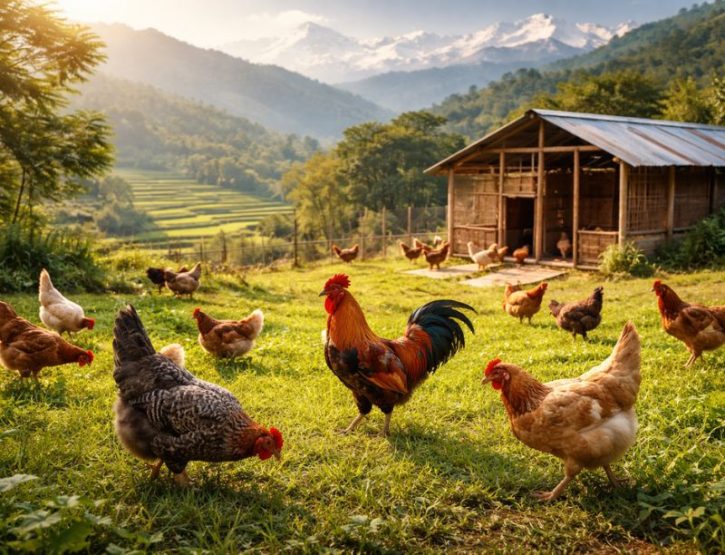
Free Range Poultry Farming: A Sustainable Path to Rural Prosperity
The free-range poultry system in Nepal is getting increased attention as farmers, entrepreneurs, and governments look for sustainable, ethical, and profitable agricultural methodologies. With its diverse geographic conditions, rich agricultural traditions, and increased demand for organic food products that are naturally produced, including free-range chicken production, is an attractive alternative to intensive chicken production in Nepal. It is beneficial to chicken welfare as well as to improve rural livelihoods.
This paper examines the concept, advantages, difficulties, market potential, and prospects for free-range poultry production in Nepal in an endeavor to offer a complete guide for anyone who is or plans to be involved in this new industry.
Why Free Range Poultry Farming in Nepal Is Gaining Popularity
Free range poultry farming is a system where chickens are allowed to roam freely outdoors for a significant portion of the day, rather than being confined to cages or overcrowded sheds. Birds raised under this system have access to natural sunlight, fresh air, insects, grass, and soil, which contribute to their overall health and well-being.
- Rising Demand for Organic and Natural Products: Urban consumers in Nepal are becoming increasingly health-conscious. There is a growing preference for eggs and meat produced without antibiotics, artificial growth promoters, or chemical feed additives. Free-range poultry farming in Nepal caters directly to this demand by offering more natural and nutritious products.
- Cultural Acceptance and Traditional Roots: Historically, poultry rearing in Nepal has been semi-free range in rural areas. This cultural familiarity makes it easier for farmers to adopt and adapt free-range systems without major resistance or behavioral change.
- Lower Initial Investment: Compared to large-scale commercial poultry farms, free-range poultry farming requires relatively lower capital investment. Simple housing structures, local feed resources, and small flock sizes make it accessible to small and marginal farmers.
- Employment Generation in Rural Areas: Free-range poultry farming in Nepal creates employment opportunities, especially for women and youth. It can be managed alongside other agricultural activities, making it an ideal supplementary income source.

Free Range Poultry Farming(Source: riverina)
Suitable Breeds for Free Range Poultry Farming
Selecting the right breed is critical for success. Breeds used in free-range poultry farming in Nepal must be hardy, disease-resistant, and adaptable to local climatic conditions.
Indigenous Breeds
- Sakini
- Ghanti Khuile
- Pwakh Ulte
- Dumse
These local breeds are well adapted to Nepal’s environment, require minimal care, and produce flavorful meat and eggs, although their productivity is lower compared to commercial breeds.
Improved and Dual-Purpose Breeds
- Giriraja
- Kuroiler
- Vanaraja
- New Hampshire
- Rhode Island Red
These breeds offer better growth rates and egg production while still performing well in free-range conditions.
Housing and Management Practices
In Nepal, free-range poultry farming often aligns with traditional village practices, where small numbers of chickens are reared in open yards or fields. However, modern free-range systems combine traditional knowledge with scientific management practices to improve productivity, hygiene, and profitability.
Poultry Housing Design
In free-range poultry farming in Nepal, housing serves as a shelter rather than confinement. A well-designed poultry house should:
- Protect birds from predators and harsh weather
- Provide adequate ventilation
- Allow easy cleaning and waste management.
- Include nesting boxes and perches.
Most farmers use locally available materials such as bamboo, wood, mud, and corrugated sheets to reduce costs.
Space Requirements
Birds should have sufficient outdoor space to forage naturally. Overcrowding must be avoided, as it leads to stress, disease, and reduced productivity.
Feeding and Nutrition
Although birds forage outdoors, supplementary feeding is essential. Common feed ingredients in Nepal include:
- Maize
- Rice bran
- Wheat bran
- Oilseed cakes
- Kitchen and farm waste
Balanced nutrition improves growth, egg production, and immunity.
Health Management and Biosecurity
Disease management is a major concern in poultry farming. In free-range poultry farming in Nepal, birds are more exposed to environmental pathogens, making preventive care essential.
Common Poultry Diseases
- Newcastle disease
- Fowl pox
- Coccidiosis
- Infectious bronchitis
Preventive Measures
- Timely vaccination
- Clean drinking water
- Regular deworming
- Maintaining cleanliness in housing
- Limiting contact with wild birds
Farmers are increasingly using herbal and traditional remedies alongside modern veterinary care to reduce dependency on antibiotics.
Economic Benefits of Free Range Poultry Farming

Benefits of Free Range Poultry Farming(Source: agricology)
Here are some benefits of free-range poultry farming:
- Higher Market Prices: Free-range chicken meat and eggs often fetch premium prices in local and urban markets due to their perceived health benefits, taste, and ethical production methods.
- Reduced Feed Costs: Since birds forage naturally, feed expenses are lower compared to intensive poultry systems.
- Diversified Income Source: Free-range poultry farming in Nepal complements crop farming by utilizing crop residues and providing manure for fields, creating a circular farming system.
- Low Risk for Small Farmers: Smaller flock sizes reduce financial risk, making this system suitable for beginners and small-scale farmers.
Challenges of Free Range Poultry Farming
Despite its advantages, free-range poultry farming in Nepal faces several challenges.
- Disease Exposure: Open access to the environment increases the risk of disease transmission from wild birds and animals.
- Predator Threats: Dogs, foxes, snakes, and birds of prey pose significant risks, especially in rural and forest-adjacent areas.
- Limited Technical Knowledge: Many farmers lack access to training, modern management practices, and veterinary services.
- Market Access Issues: While demand is growing, structured markets, certification systems, and cold chain facilities are still limited.
Steps to Start Free Range Poultry Farming in Nepal
The following are the steps:
- Market Research – Understand local demand and pricing.
- Breed Selection – Choose suitable local or improved breeds.
- Farm Setup – Prepare housing and outdoor space.
- Training – Gain basic knowledge of poultry management.
- Health Planning – Follow vaccination and hygiene protocols.
- Marketing Strategy – Identify buyers and promote products.
Starting small and scaling gradually is the most effective approach.
Conclusion
Free-range poultry farming is an example of sustainable, ethical, and profitable farming practice in Nepal. This practice amalgamates old farming practices with new, as it offers benefits to farmers, as well as to the environment and the people consuming the produce. Despite certain setbacks, it still has tremendous potential with effective planning and education.
With the aims of sustainable agricultural development in mind for the government of Nepal, the use of free-range poultry farming can be identified as a significant means of ensuring improved lives for the citizens, food security, and environmentally responsible practices.
Read More: Climate-Controlled Poultry House