
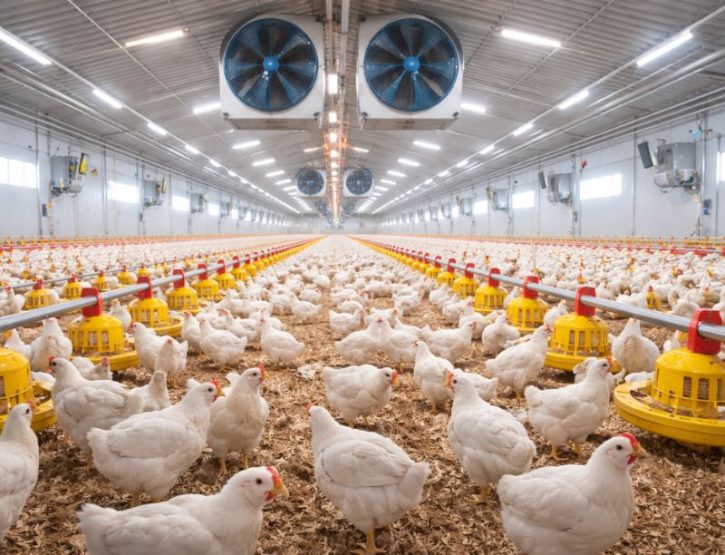
Climate-Controlled Poultry House: A Complete Guide
The Nepalese poultry industry has registered significant progress during the past two decades and developed from small-scale backyard to commercial-scale farms. Along with the increase in the demand for poultry meat and eggs because of the rise in the population and the shift of the masses towards the urban lifestyle, the need to enhance the productivity of the birds while lowering the production losses and attending to bird welfare is increasing every day.
It is here that the need for a climate-controlled poultry house in Nepal has come into the picture as an innovation in the field of poultry rearing.
A climate-controlled chicken house employs modern technology in regulating temperature, humidity, ventilation, and air, ideally meeting the chicken’s requirements in any weather condition throughout the year. Looking at the Nepalese climatic conditions, ranging from hot Terai plains, hilly, to hilltop areas, a climate-controlled chicken house provides a sure means for production in any weather conditions outside.
This paper offers a detailed report of climate-controlled poultry house systems in Nepal, including their relevance, design, advantages, and limitations.
Understanding Climate-Controlled Poultry Housing
A climate-controlled poultry house is an enclosed farming structure equipped with automated systems that manage internal environmental conditions. These systems typically include exhaust fans, cooling pads, heaters, air inlets, sensors, and controllers. Together, they maintain ideal temperature, humidity, airflow, and oxygen levels for poultry birds.
In traditional open or semi-open poultry sheds, birds are directly affected by seasonal temperature fluctuations, high humidity, dust, and disease-causing pathogens. In contrast, a climate-controlled poultry house in Nepal creates a stable and hygienic environment, allowing birds to grow faster, remain healthier, and convert feed more efficiently.
Why Nepal Needs Climate-Controlled Poultry Houses
Nepal’s geography and climate present unique challenges for poultry farming. The Terai region faces extreme heat in summer, while hilly and mountainous areas experience cold winters. Monsoon seasons bring high humidity and disease pressure, which can severely affect poultry performance.
Key reasons climate-controlled systems are essential in Nepal:
- Extreme seasonal temperature variation
- High mortality rates in traditional poultry sheds
- Rising feed costs and narrow profit margins
- Increased disease outbreaks during the monsoon
- Growing demand for a consistent poultry supply

Climate-controlled systems(Source: zootecnicainternational)
By adopting a climate-controlled poultry house in Nepal, farmers can overcome these challenges and achieve year-round production stability.
Key Components of a Climate-Controlled Poultry House
To function effectively, a climate-controlled poultry house relies on several integrated components. Each plays a crucial role in maintaining bird comfort and farm efficiency.
- Ventilation System: Ventilation is the backbone of climate control. Tunnel ventilation systems are commonly used, where powerful exhaust fans draw air across the house. Fresh air enters through cooling pads or air inlets, removing heat, moisture, dust, and harmful gases like ammonia.
- Cooling System: In hot regions of Nepal, especially the Terai, evaporative cooling pads are installed at one end of the poultry house. These pads lower incoming air temperature, helping birds cope with heat stress during the summer months.
- Heating System: For colder regions and winter seasons, heaters or brooders are essential to maintain optimal temperatures, particularly for chicks. Proper heating ensures better early growth and reduces chick mortality.
- Sensors and Controllers: Modern climate-controlled poultry houses use automated controllers connected to temperature, humidity, and pressure sensors. These systems adjust fans, heaters, and cooling units automatically, minimizing human error.
- Insulation and Building Materials: Good insulation is critical in Nepal’s variable climate. Insulated roofs, walls, and curtains help maintain internal temperatures and reduce energy costs.
Benefits of Climate-Controlled Poultry Houses
Here are Some Benefits:
- Higher Productivity: Birds raised in controlled environments show better growth rates and higher egg production. Stable conditions prevent stress-related performance drops.
- Lower Mortality Rate: Heat stress, cold stress, and disease outbreaks are major causes of bird mortality in Nepal. Climate-controlled housing significantly reduces these risks.
- Improved Feed Conversion Ratio (FCR): Feed accounts for nearly 60–70% of poultry production costs. Climate-controlled systems help birds utilize feed more efficiently, reducing overall expenses.
- Better Biosecurity: Closed housing limits the entry of wild birds, insects, and pathogens. This improves farm biosecurity and reduces reliance on antibiotics.
- Year-Round Production: A climate-controlled poultry house in Nepal allows farmers to produce consistently throughout the year, regardless of seasonal changes.
Economic Aspects and Cost Considerations
The initial investment for a climate-controlled poultry house is higher than that of traditional open sheds. However, long-term returns often justify the cost.
Approximate cost factors include:
- Land and building construction
- Ventilation and cooling equipment
- Heating systems
- Automation and control panels
- Power supply and backup systems
While setup costs may be challenging for small-scale farmers, cooperative farming models, bank loans, and government subsidies can help make climate-controlled systems more accessible in Nepal.
Energy and Power Challenges in Nepal
One of the main concerns with climate-controlled poultry houses in Nepal is energy dependency. Frequent power cuts in rural areas can disrupt ventilation and cooling systems, posing serious risks to birds.
Practical solutions include:
- Solar power integration
- Diesel or gas generators as backup
- Energy-efficient fans and equipment
- Proper insulation to reduce power consumption
Solar-powered climate-controlled poultry houses are gaining popularity, especially in areas with unreliable electricity.
Environmental and Animal Welfare Impact
Climate-controlled poultry houses not only benefit farmers but also support animal welfare and environmental sustainability.
- Reduced heat and cold stress improves bird welfare.
- Efficient manure management lowers environmental pollution.
- Lower mortality reduces waste and resource loss.
- Optimized energy use reduces carbon footprint.
As consumer awareness about ethical poultry farming grows, climate-controlled systems align well with modern welfare standards.
Challenges in Adopting Climate-Controlled Poultry Houses
Despite their advantages, several challenges limit widespread adoption in Nepal:

Challenges in Climate-Controlled Poultry Houses(Source: wattagnet)
- High initial investment
- Lack of technical knowledge among farmers
- Limited access to skilled technicians
- Dependence on electricity
- Insufficient government support in remote areas
Addressing these issues through training programs, technical support, and financial incentives is essential for broader adoption.
Role of the Government and Policies
The Nepalese government and agricultural departments are playing a vital role in encouraging climate-controlled chicken houses. Favorable government policies, easy loans, and training the farmers would help expedite the modernization process of chicken production.
With the help of public-private partnerships and association with global agricultural bodies, it can be made easier to implement modern poultry housing systems in the country of Nepal.
Conclusion
A climate-controlled poultry house in Nepal is an important advancement in commercial poultry rearing. Although it costs more in terms of capital outlay, it is more cost-effective in terms of increasing productivity rates, reducing mortality rates, improving feed conversion ratios, and controlling diseases in poultry rearing.
In such a country as Nepal, where there are severe challenges to raising poultry through climate change, controlled-climate housing in poultry farms ensures stability, resiliency, and growth. This state-of-the-art technology in poultry rearing has the potential to change the Nepalese poultry sector into a lucrative, ethical, and progressive enterprise.
Read More: Poultry Egg Handling