

Poultry Feed Types: Guide for Healthy Farming
Among all animal farming practices in Nepal, poultry farming has emerged as a practice with a tremendous rate of growth. The growing demand for chicken meat and eggs has compelled the country to shift from backyard animal farming to semi-commercial and commercial animal farming. At the heart of this emergence, there is a specific factor that has drawn the attention of animal farmers, investors, and poultry farming practitioners towards Nepali animal feed types.
The current article offers an informative overview of various types of poultry feed, their nutritional value, availability, etc., in Nepal.
Nepal’s poultry feed market has seen tremendous growth during the past two decades. Poultry feeds formulated by these plants are produced using locally sourced and imported raw materials. The commonly used feed ingredients in Nepal are maize (corn), rice bran, wheat bran, soybean meal, mustard cake, sunflower cake, fish meal, limestone, dicalcium phosphate, vitamins, and mineral mixes.
Classification of Poultry Feed Types Used in Nepal
Poultry feeds in Nepal can essentially be classified into the following:
- Broiler Feed
- Layer feed
- Breeder feed
- Starter, Grower, and Finisher Feeds
- Mash, Crumble, and Pellet Feeds
- Organic and alternative feeds
Each type has a particular function in poultry farming.
Broiler Feed Types in Nepal
Broiler chickens are raised specifically for meat production and require high-energy, high-protein diets to support rapid growth. Broiler feed types in Nepal are formulated to achieve maximum weight gain in the shortest possible time, typically within 35 to 45 days.
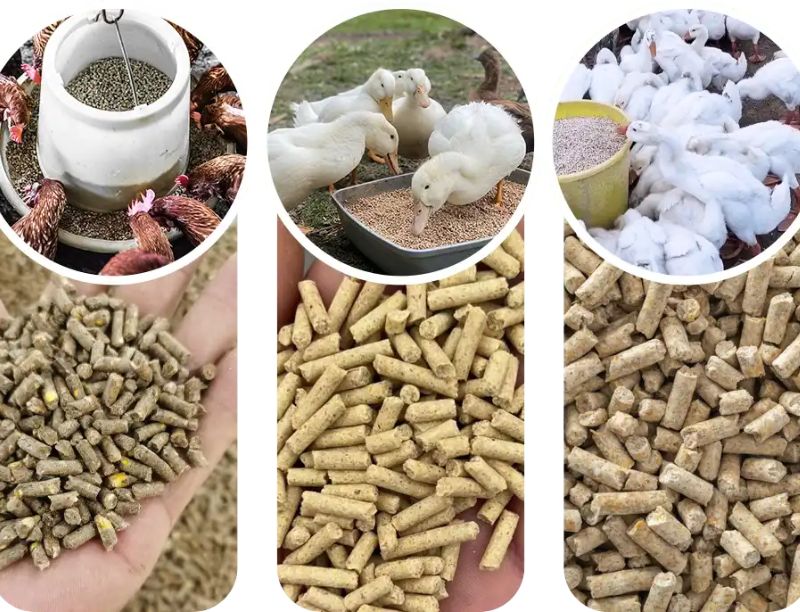
Broiler Feed Types(Source: kwmach)
Broiler Starter Feed
Broiler starter feed is given from day one up to 10–14 days of age. This feed contains:
- Crude Protein: 21
- Metabolizable Energy: High
- Lysine and methionine, which are essential amino acids.
- Vitamins and minerals involved in immune development
In the case of Nepal, the broiler starter feed may be available in a crumble or mash form to allow for easy consumption.
Broiler Grower Feed
The grower feed is made available from approximately 15 days to 28 days of age. The protein is slightly lower compared to the starter feed, while the energy is high for muscle development.
- Crude protein: 19–20%
- Balanced calcium and phosphorus
- Digestive enzymes in some commercial feeds
This is one of the most commonly used poultry feed types in Nepal due to the large broiler population.
Broiler Finisher Feed
Finisher feed is given during the final growth stage, from around 29 days until market age. The objective is to maximize body weight and improve feed conversion ratio.
- Crude protein: 17–18%
- High energy content
- Lower fiber for better digestibility
Many Nepali farmers prefer pellet-type finisher feed because it reduces feed wastage and improves growth performance.
Layer Feed Types in Nepal
In Nepal, layer chickens need a special diet to keep laying eggs, stay healthy, and live longer. Farmers use different types of feed at each stage of a bird’s life to hit these targets.
Layer Starter Feed
Right from day one until they’re about 6 to 8 weeks old, chicks eat layer starter feed. This feed packs in 18–20% crude protein, plus plenty of vitamins A, D, and E, and minerals for strong bones. When chicks get proper starter feed, they grow at the same pace, which sets them up for better egg production later on.
Layer Grower Feed
After about 9 weeks and up until 18 weeks, birds switch to grower feed. This feed has a bit less protein (15–16%), controlled energy to keep birds from getting too fat, and low calcium. In Nepal, a lot of farmers skip this step, but honestly, it’s a game-changer for getting birds ready for their peak laying period.
Layer Finisher or Layer Mash
When birds hit 18 to 20 weeks and start laying, it’s time for layer finisher feed, or layer mash, as most people call it in Nepal. This feed bumps protein up to 16–18% and has a high dose of calcium (about 3.5–4%), so eggshells come out strong. It also has phosphorus and vitamin D3 to help birds absorb that calcium. You see layer mash everywhere in Nepal, especially on small and mid-sized farms.
Breeder Feed Types in Nepal
Breeder chickens are a different story. They lay the eggs that hatch into chicks, so their feed needs to be dialed in, way more precise than what broilers or regular layers get. The feed’s got to boost fertility, hatchability, and chick health.
In Nepal, breeder feed comes in three main types: starter, grower, and layer. These feeds have carefully balanced energy, the right amount of protein, extra vitamin E and selenium, and specific fatty acids to help birds reproduce well. Big farms and hatcheries use breeder feed most often because it costs more.
Mash, Crumble, and Pellet Feed Forms
Feed isn’t just about what’s inside; it’s also about how it’s made. In Nepal, you’ll see feed in three main forms.
Mash Feed
This is just finely ground feed, and farmers use it for layers and backyard flocks. It’s cheap to make and easy to mix with local stuff, but birds waste more of it and don’t always eat it as efficiently.
Crumble Feed
Crumble is basically pellets broken down into smaller bits, mostly for chicks. It’s easier for them to eat and helps with early growth.
Advantages:
- Easy to eat
- Better feed intake
Pellet Feed
Manufacturers compress pellet feed into small cylindrical shapes.
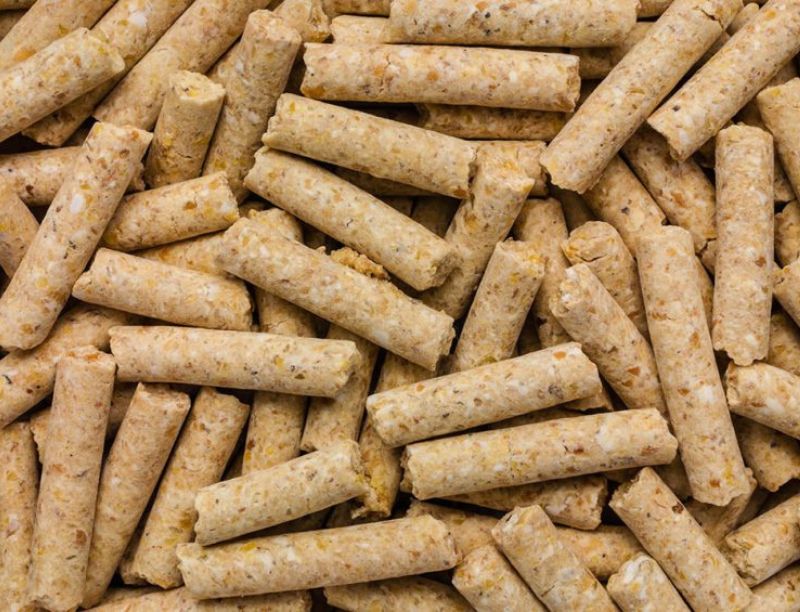
Poultry Pellet Feed(Source: poultryworld)
Advantages:
- Reduced feed wastage
- Better growth rate
- Improved feed conversion ratio
Pellet feed is increasingly popular among commercial poultry farmers in Nepal despite its higher price.
Organic and Alternative Poultry Feed Types in Nepal
With the awareness of health and environmental issues, the concept of organic poultry farming is gradually developing in Nepal. Organic forms of poultry feeds in Nepal do not contain additives, antibiotics, or genetically modified materials.
Common organic and alternative feed ingredients:
- Locally grown maize
- Millet and Sorghum
- Rice bran
- Kitchen waste (properly treated)
- Azolla
- Insects and earthworms
- Green fodder like spinach and grass
Although organic feed costs more and lacks standardization, it offers a premium opportunity, and farmers can clearly see its advantages.
Nutritional Components of Poultry Feed
Regardless of type, all poultry feeds must supply six essential nutrients:
- Carbohydrates – these are the chief source of energy, examples of which are maize and wheat.
- Proteins – Growth and tissue repair -soyabean meal, mustard cake.
- Fats – a concentrated energy source
- Vitamins – Immunity and metabolism
- Minerals – Development of bones and eggshells
- Water – Easy to forget, yet essential
A balance of these nutrients is actually the basis for effective formulation of poultry feed in Nepal.
Challenges in Poultry Feed Production
Despite significant growth, the poultry feed industry in Nepal still faces numerous difficulties:
- Heavy dependence on imported soybean meal
- Increasing cost of raw materials
- Poor and inconsistent feed quality among small mills
- Facilities for limited laboratory testing
- Seasonal deficits of maize
We must address these challenges to improve poultry productivity and strengthen food security.
Conclusion
Knowledge of different kinds of poultry feed available in Nepal is a basic necessity for those involved in poultry rearing at all levels of production, whether it is at a small scale in backyard systems or at a large scale in commercial systems. Poultry feeding is not only about providing an input; it’s about providing the foundation to ensure high production and profitability of poultry and to maintain good animal welfare.
However, with improvements and further advancements in the poultry industry in Nepal itself, improvements concerning poultry feed formulation and poultry feed quality control will be crucial for the success of the poultry industry in Nepal.
Read More: Poultry Immunity Booster